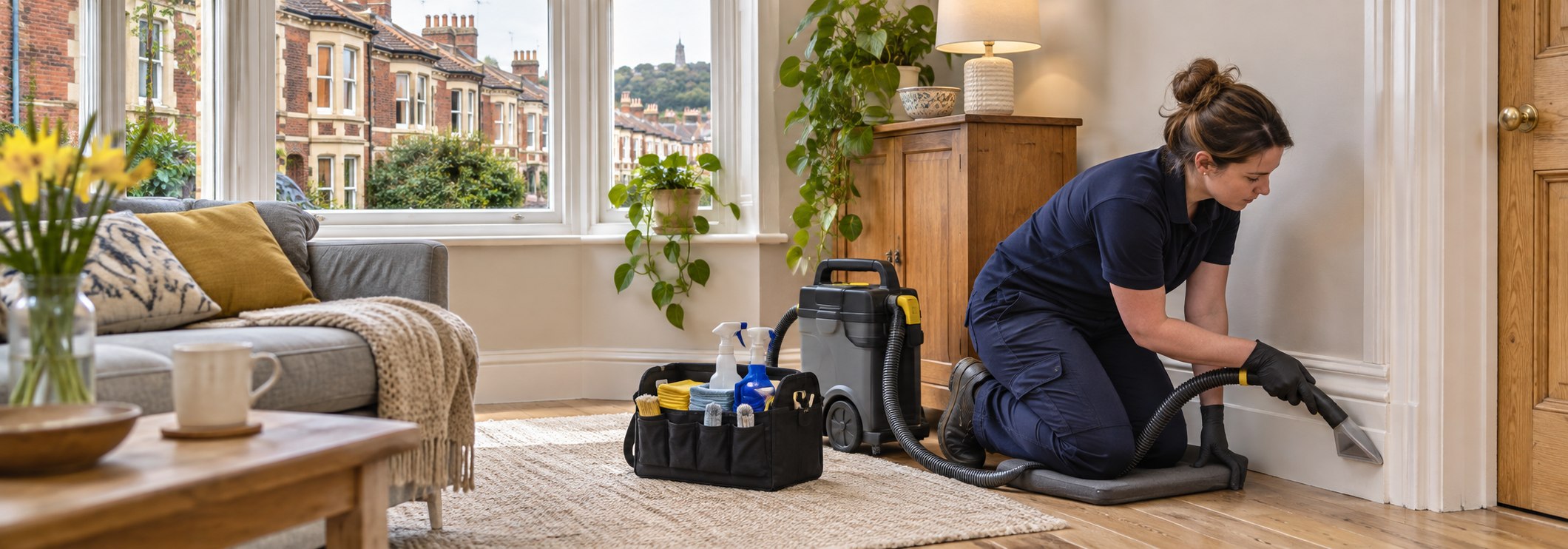

In an occupied Bristol home, the hardest cleaning is often around the things that stay in place. Grease can collect along the top of a kitchen unit, limescale around taps and dust in the grooves of a sash window. Tell Nova Clean which two or three details are causing the most difficulty and which rooms must remain usable. We build the house or flat deep clean around those priorities, the surfaces involved and what can reasonably be moved on the day.
A deep clean is defined by the condition of the rooms
House and flat deep cleaning in Bristol is most useful when ordinary upkeep has not reached ingrained grease, limescale, settled dust or neglected fittings. The brief should identify the rooms, surfaces and expected handover rather than rely on a promise to clean everything. A family preparing a home for occupation may prioritise kitchen cupboards and bathrooms; an owner after prolonged vacancy may need a different sequence that begins with inspection and safe access. Nova Clean discusses the property condition, available utilities and any surface sensitivities before proposing work. Cleaning can improve a surface only within its material limits. A stained grout line, damaged paint or worn sealant may require repair or replacement, while a continuing leak needs its source addressed. The first step is a realistic description of what is present, including inaccessible areas and appliances that may need to be moved by an authorised person.
Choosing the rooms and fittings to include in a deep clean
Floor area alone gives a poor measure of a deep clean. We ask about the number of bathrooms, appliances, cupboards, glazing, furniture and the extent of accumulated deposits. Photographs can help, but a room that looks tidy from the doorway may hide grease inside cabinets or limescale around fixtures. Tell us when the home was last occupied, whether pets are present, whether water and power work, and whether parking or stairs complicate access. For a flat in Clifton or Redland, the shared entrance and lift rules may matter; in a family house in Winterbourne, an outbuilding or utility room may add a separate stage. An estimate should name the included areas, the agreed level of appliance cleaning and what is outside the scope. If we discover a damaged surface or unexpected contamination once access is available, the change should be discussed before any extra work is undertaken.
Preparing the home for safe, efficient cleaning
Clear essential papers, medication, valuables and fragile belongings from worktops and cupboards where possible. If a cupboard is to be cleaned inside, identify its contents and arrange a place for them. Tell us which items must not be moved and whether someone will be present to make decisions. Secure pets away from the working area and explain any building access rules. Working taps and electricity are useful for equipment and rinsing, but a property without utilities can still be assessed for an alternative plan. Avoid applying household chemicals immediately before the visit: mixed residues can complicate treatment. Where there is obvious mould, a strong odour or a suspected infestation, describe it at the enquiry stage so the conditions can be evaluated separately. A deep clean should follow essential repairs and the removal of loose building debris, rather than being scheduled while dust-producing work is still underway.
Kitchen cleaning with attention to grease and food-contact areas
A kitchen needs a sequence that prevents loose dirt from being spread onto cleaned surfaces. We can discuss cabinet fronts and interiors, worktops, splashbacks, sinks, taps, extractor exteriors, appliance doors and accessible floor edges. Grease that has hardened around a hob may need dwell time and careful mechanical work. The substrate matters: painted units, stone worktops and coated metal can respond differently to alkaline products or abrasion. If an oven, fridge or other appliance is included, clarify whether it is emptied, disconnected where appropriate and safe to access. An internal appliance clean is not automatically part of every whole-house specification. Where food is stored, the owner should remove or protect it and agree when surfaces may be used again after cleaning and drying. For a commercial kitchen, the scope and operational controls differ; see our commercial kitchen cleaning guidance.
Bathrooms, hard water deposits and sanitation
Bathrooms often need more detailed work around taps, shower screens, tiles, sanitaryware, drains and ventilation grilles. Limescale may have built up in layers, while soap residue and body oils can collect at edges that routine wiping misses. The method depends on whether the surface is ceramic, acrylic, glass, natural stone or a coated fixture. Acidic descalers can damage some materials, and aggressive scraping can scratch screens or fittings. We discuss visible deposits and test a cautious method when the material is uncertain. Dark marks in failed silicone or damaged grout may not be removable through cleaning; renewal may be required. Condensation or leaks should be addressed if discolouration keeps returning. The aim is a clearly specified clean, followed by sufficient rinsing and drying, not an unsupported claim that every old fixture will look new.
Bedrooms, living rooms and dust control
Living areas may contain a mix of accessible hard surfaces, upholstered furniture, electronics and delicate finishes. High ledges, skirting, doors, handles, switches, shelving and reachable fixtures can be listed in the scope. Dust removal is more effective when the work follows a sensible route from upper areas to floors. Moving heavy furniture requires agreement and a safe route; it should not be assumed from a generic room description. Painted walls, wallpaper and unfinished timber may need limited treatment rather than wet wiping. If carpets, rugs, mattresses or upholstery need more than surface vacuuming, specify them separately so their fibres, stains and drying conditions can be considered. A deep clean of a room does not necessarily include a restorative treatment of every soft furnishing. Distinguishing those tasks helps the owner choose the right service and makes the final inspection fair.
Floors and materials that demand different methods
Hard floors can include tile, vinyl, laminate, sealed timber, natural stone or painted surfaces. A product or machine suitable for one can harm another. Before cleaning, identify any loose joints, worn coatings, water damage and areas where liquid can reach a vulnerable edge. Natural stone may require a different approach from ordinary ceramic tile; marble polishing is a separate restoration service rather than a routine floor wash. Carpet treatment depends on fibre and backing, as well as ventilation and time available for drying. We can discuss targeted stain work, but permanent colour change or material damage may remain. In shared buildings, consider whether a cleaned corridor or stairway must stay open during the work. A careful specification says which floor areas are included, what can be moved and what condition limits the expected result.
Interior glazing, frames and detailed fittings
 When you list windows, distinguish the inside pane from the frame, sill and accessible track. A quotation that only names the glass leaves room for different expectations at handover. In a furnished room, also identify any desk or cabinet that prevents access. If a bedroom carpet needs more than vacuuming, ask for carpet cleaning separately so that its drying time can be coordinated with the rest of the home.
Windows can be a significant part of a deep clean, especially in a property that has been empty or recently refurbished. Agree whether interior panes, reachable frames, sills, tracks and blinds are included. Exterior glazing may require different access equipment and should be identified separately. Older window frames can have fragile paint, loose seals or condensation marks that cleaning cannot fix. Tracks with compacted dirt may take more time than glass itself. Door frames, light fittings and ventilation covers also vary in accessibility. Electrical fittings should be treated with appropriate care and without introducing moisture into powered components. If blinds or removable filters need dismantling, the owner or a competent contractor may need to do that before cleaning. Naming these small components in the brief prevents them from being missed or assumed.
Deep cleaning after a tenancy or building project
A deep clean may support a move, but an end of tenancy clean is usually tied to a handover inventory and agreed checklist. The two scopes may overlap without being identical. Ask the agent or landlord which areas require evidence of cleaning and what remains the tenant’s responsibility. After building work, fine dust can settle again if trades are still drilling or sanding. Our after builders cleaning information explains a staged approach to residue on new finishes. A deep clean booked too early can lead to repeat work. For a vacant property, check that repairs, leak investigations and clearance are complete before arranging the final clean. Photograph existing damage where relevant so that cleaning is not confused with repair. A clear order of work saves time and gives the person receiving the property a more dependable result.
When a standard deep clean is not the right scope
A property affected by fire, flood, prolonged hoarding or another serious event may need assessment and specialist cleaning. Soot, contaminated water, sharps, heavy bird fouling or extensive damp should be disclosed before a domestic deep clean is priced. These conditions can call for protective measures, removal of damaged materials or another contractor to address the source. Do not enter an unsafe room merely to photograph it. If belongings block access, sorting and house clearance may be needed first. A routine clean should not be represented as decontamination or structural repair. We can discuss the circumstances and decide whether a different specialist brief is required. This protects the occupants, the team and the quality of the eventual handover.
Working around Bristol neighbourhoods and building types
Greater Bristol includes older terraces, converted flats, newer family housing and commercial premises mixed with homes. Around the Floating Harbour and city centre, loading and access windows can shape the visit. Clifton and Redland may involve narrow stairs, older finishes and shared entrances. Bedminster and Southville have varied residential layouts, while Filton, Winterbourne, Frampton Cotterell and Pill introduce different travel and property conditions. These are planning considerations, not fixed assumptions about a neighbourhood. Tell us the exact address, floor level, parking restrictions and whether the property will be occupied during work. If an agent, family member or key holder will meet the team, agree the inspection and handover arrangements in advance. Local logistics can be as important as square metres when scheduling an intensive clean.
A practical room-by-room handover
Before work starts, a room list can distinguish included tasks from optional treatments. After cleaning, the owner or representative can walk through the same areas and record any remaining limitations. A badly worn seal, ingrained stain or damaged surface should be explained in the context of its material and condition. If furniture prevented access, note the area rather than imply it was cleaned. Ventilation and drying may mean a room needs a little time before full use. For an absent owner, agreed photographs or a written record can help, subject to privacy and access instructions. Keeping the quotation and handover aligned makes it easier to plan follow-on trades, reoccupation or an inventory inspection. It also gives a useful basis for any separate carpet, upholstery, exterior or restorative work.
What affects the time and cost of a deep clean
The hours needed depend on deposits, materials, room count, access and the agreed detail. A small flat with heavy grease and limescale can demand more work than a larger but well-kept home. Empty rooms are usually easier to reach, but empty properties may reveal neglected edges that were previously hidden. Separate appliance interiors, specialist floor treatments and exterior areas need to be stated explicitly. A short deadline can affect scheduling, and work in a shared block may need to respect quiet hours or loading rules. We prepare a proposal from the information available and explain when a visit is needed. There is no useful universal price per square metre for every deep clean. An itemised description is a better way to compare offers than an unexplained total or a promise of perfect restoration.
Discuss your Bristol cleaning plan
Send the postcode, property type, room count, photographs if safe to take, preferred date and the main concerns in each area. Explain whether the property is occupied, whether appliances are empty and whether carpets, upholstery or exterior surfaces need separate attention. Tell us about known damage, utility problems and any access constraints. Call 0845 52 805 20 or email