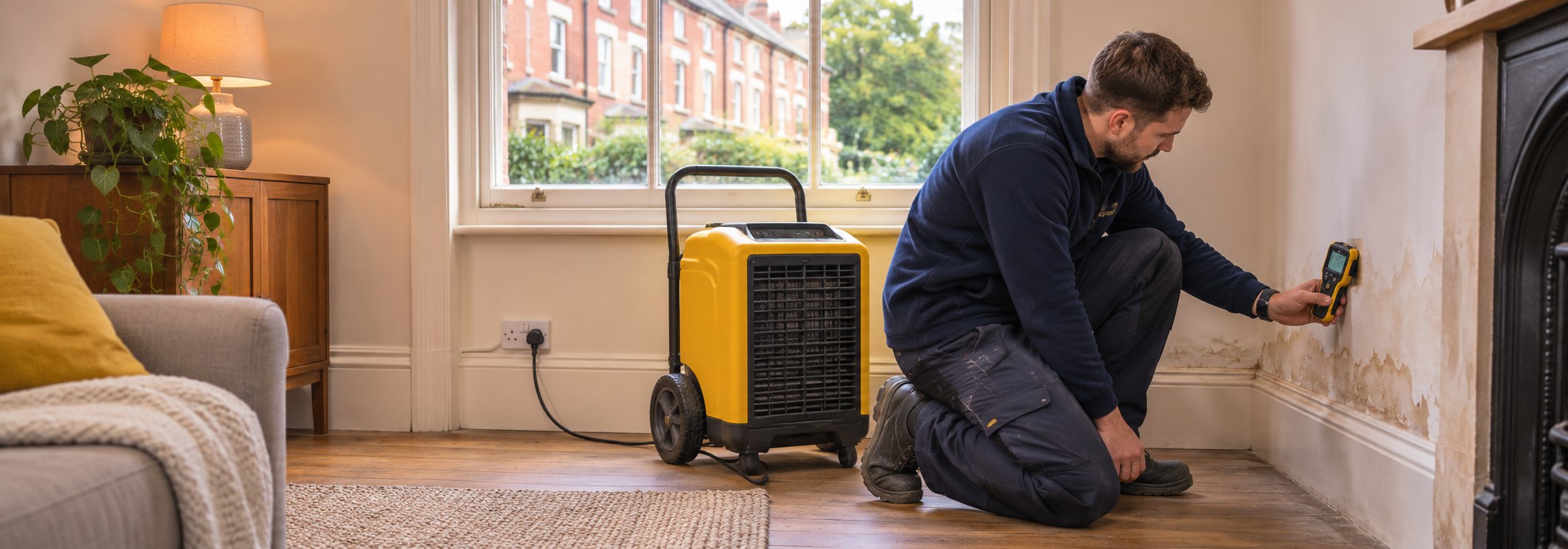
Water and flood damage cleaning in Bristol
 A leak from the flat above can leave a cupboard plinth swollen even when the visible floor looks dry. Floodwater entering from the street raises different questions about what has reached the property. When you contact Nova Clean Bristol, describe the source if known, the route the water took and who has confirmed access. That information helps the owner, cleaning team and drying contractor agree which materials to assess before furniture or finishes go back.
Start with safety and the source of water
Do not enter standing water where electrical equipment or wiring may be affected. Ask the appropriate emergency service, utility provider or competent trade for advice where a hazard is suspected. If the water is still entering, a plumber, roofer or drainage professional may need to address the source before cleaning can make lasting progress. A cleaner cannot certify electrical safety or structural soundness. Keep people away from sagging ceilings, unstable floors and other damage until the area has been assessed. Tell us whether water has been isolated, whether electricity is available and which rooms have been released for access. A burst clean water pipe, rainwater entering from a roof and water backed up from a drain are different situations; the description determines the questions we ask and the precautions needed. The first visit may be an assessment of accessible areas, followed by a staged scope once the source and safety issues are under control.
Identify the route the water took through the building
The visible wet patch may not be the full extent. Water can run under flooring, behind skirting, along a service void and through a ceiling into a room below. Porous finishes may hold moisture after the surface looks dry. We ask when the incident began, how much water is known to have entered, whether it was removed already and what construction materials are involved. Photographs taken safely can show the sequence of affected rooms, but an inspection may be needed to understand concealed areas. A damp carpet might have wet underlay; a tiled floor may have moisture in joints or adjacent wall finishes. These observations guide decisions about what can be cleaned, what may need removal and what requires a drying or building specialist. We avoid promising a finished clean based solely on a photograph of standing water.
Distinguish the water source before choosing a method
Water from a supply pipe is not the same as water that crossed a street, garden or drain before entering the property. The latter may carry soil, debris or other contaminants that change the handling and cleaning plan. Appliance leaks can also contain detergents or residue from the machine. When the source is uncertain, do not assume the affected material is harmless. Explain what you know about the route and whether the water was in contact with a bathroom, drain, outside surface or industrial area. We can then discuss access, containment and the need for further assessment. The distinction also affects what should be kept, discarded or separately evaluated. A porous item affected by contaminated water may require a different decision from a washable hard surface. The quotation should reflect the known facts and state where uncertainty remains rather than treating all floods as identical.
Remove standing water without spreading damage
Once the area is safe to enter, accessible standing water may need to be removed before detailed cleaning or drying can begin. The choice of equipment depends on depth, debris, access and the surfaces beneath. Extraction should not be presented as proof that a floor or wall is dry: it removes free water, while absorbed moisture can remain inside materials. A large open ground floor differs from a furnished upstairs room with water beneath a fitted carpet. We discuss what items must be moved by the owner, how the water can be collected and where equipment can be placed. If a room contains fragile finishes or electrical devices, these should be considered before work starts. Any continuing inflow, blocked outlet or unsafe structure can interrupt the proposed sequence and may need another contractor to resolve it. A clear plan keeps extraction, cleaning and drying as distinct stages with separate outcomes.
Decide what can be cleaned and what needs further assessment
Materials respond differently to water. Glazed tile, sealed metal and some hard finishes may be cleanable after the cause is resolved, while carpet backing, underlay, plasterboard and insulation can retain moisture or contamination. Timber may swell, stain or change shape as it dries. A cabinet can look intact from the front while its base is wet. We review the visible condition and explain where a test, opening-up work or specialist moisture assessment may be needed. The person responsible for the property should approve removal of fixed finishes or valuable contents. Cleaning an exposed face cannot guarantee the condition behind it. Where an item cannot be restored to the intended use by cleaning alone, a replacement decision belongs to the owner, insurer and relevant trade. We distinguish an old mark from new water damage where that can be reasonably observed, without making an unsupported claim about every concealed component.
Coordinate cleaning with drying rather than rushing decoration
 Drying time varies with the material, depth of moisture, temperature, ventilation and whether the source has truly stopped. A room that feels comfortable to stand in may still contain wet layers. We ask whether a drying contractor or surveyor is monitoring the property and what sequence they have proposed. Cleaning can remove accessible dirt and debris before or after particular drying stages, but repeated wet treatment on a material that has not dried may be counterproductive. Decorating over damp plaster or enclosing a wet floor can conceal a continuing problem. A coordinated programme allows the owner to decide when repairs and final cleaning should follow. We avoid fixed promises about drying duration without measurements and an assessment of the building. If an odour or staining persists, its source should be investigated rather than covered with fragrance or a new finish.
Manage belongings and document decisions
Water can affect books, clothing, furniture, documents, stock and electrical equipment at different levels. Agree who may move each item and who will decide whether it is cleaned, stored or discarded. Do not energise an appliance that has been submerged or exposed to an uncertain electrical condition simply to test it. A household may want time to identify sentimental possessions; a business may need an inventory of damaged stock and equipment. The cleaning scope can include moving accessible items to reach a floor, but it should not silently extend to restoration of every object in the room. Photographs and a list may be useful for an insurer if the policyholder needs them. The person commissioning the work can confirm the preferred format before removal. If an item requires specialist conservation or repair, that should be recognised separately from ordinary cleaning. Clear instructions prevent accidental disposal and make the handover easier to review.
Work in occupied flats and shared buildings
In a divided house, the occupier may control the flat while a managing agent controls the stair cupboard below it. Put both areas on the room schedule and give each a contact for access. Photographs taken at the same doorway on different visits are easier to compare than a general view of the landing. If a floor or partition is replaced, cleaning after reinstatement can be booked for the part of the building the trades have finished.
A leak in an upper-floor flat can affect a neighbour below even where the original room has been mopped. A managing agent may need to coordinate access to multiple homes, agree routes through communal areas and identify who can authorise work in each premises. The cleaning team should not assume that permission for one flat extends to another. Residents may need to avoid a wet corridor or temporarily move belongings while work is carried out. In Clifton, Redland and central Bristol, narrow staircases, shared entrances and limited parking can affect how equipment is brought in. A property in Filton or Pill may have easier vehicle access but a different timetable or drainage arrangement. We use the address and access details to plan logistics without claiming that all water damage in a neighbourhood behaves the same way. The quotation should say which rooms and common areas are included and which remain subject to separate instruction.
Consider mould concerns without masking the cause
Persistent damp can allow visible growth or a musty smell, but the response begins with identifying and controlling moisture. A surface treatment alone cannot resolve a leaking roof, wet cavity or continuing condensation problem. Tell us whether a damp smell existed before the incident, whether growth is visible and whether any materials have remained wet for an extended period. The extent and location may call for a survey or other specialist input before a cleaning method is chosen. We can discuss cleaning of accessible suitable surfaces within a defined scope, while structural drying and repair are considered separately. Avoid disturbing a large affected area without a plan for access and containment. At handover, the owner should know what was treated, what still needs drying and what evidence would justify further investigation. We do not promise to prevent future growth where the moisture source has not been addressed.
Make a quotation specific to the property
Tell us the source of water if known, when it entered, the affected floors and rooms, the material underfoot, available utilities and whether the premises remain occupied. Mention any standing water, previous extraction, drying equipment, insurance involvement and deadlines for repairs or handover. Existing photographs can be helpful if taken from a safe position. A useful quotation identifies the accessible areas, debris removal, cleaning tasks, waste assumptions and exclusions. It can also state which questions depend on lifting a covering or obtaining a moisture assessment. If hidden damage changes the work, the authorised person should review a revised scope before additional removal begins. A fixed price based only on floor area can miss the most important condition: what the water has reached. We discuss whether a visit is needed to make the proposal more reliable and how the completed work will be checked.
Plan the handover and the next stage of recovery
At the end of a cleaning stage, confirm what has been removed, which surfaces were treated and which rooms still need drying, repair or further assessment. A cleaned floor is not necessarily dry beneath its finish, and a wall that has lost staining may still have a leak behind it. The handover should make those limits clear to the owner and the next contractor. If builders will replace plaster or flooring, a final detailed clean may be more useful after the disruptive work is complete. Tenants, landlords and managing agents can use a room schedule to coordinate access and avoid paying for the same surface to be cleaned repeatedly. For a business, the return of staff or stock may depend on other competent assessments as well as the cleaning result. We provide a defined cleaning service and explain what remains outside it so that the person responsible can make the next decision with suitable information.
What to tell the team before the first flood cleaning visit
Has the water stopped, and who confirmed that the affected rooms may be entered? Are the floor coverings still in place, or has a contractor already lifted them? Is the property heated and ventilated, or has it been closed since the incident? Has anyone recorded the extent of damage for an insurer, and is there a key holder who can approve decisions while work proceeds? These details help distinguish a straightforward surface clean from a job that depends on extraction, controlled removal and a drying programme. If a neighbour's property may also be affected, the managing agent should arrange separate access rather than asking the cleaning team to enter without permission. If the source was outside, note any debris or sediment left behind and whether drains remain blocked. There is no benefit in treating a surface while new water is still arriving. A short, accurate brief allows a more useful first visit and reduces the chance of a rushed method being applied to an unsuitable material.
To discuss water or flood damage cleaning in Bristol and nearby towns, call 0845 52 805 20 or email