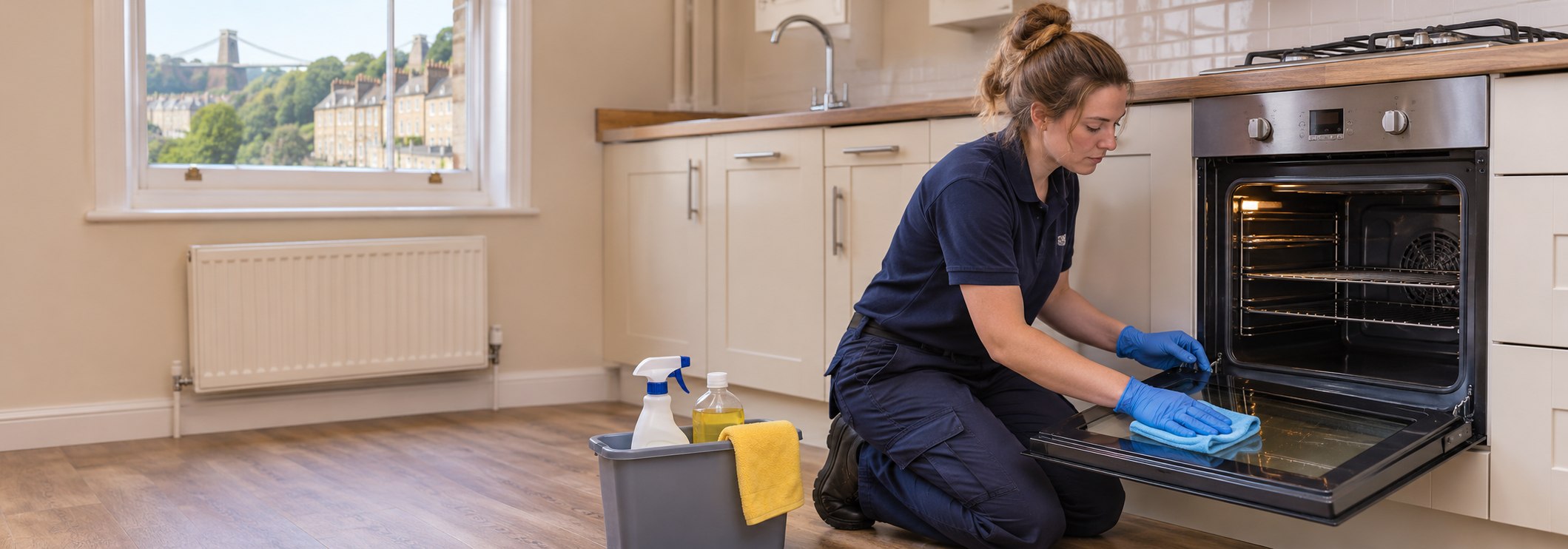

Start with the check-out appointment and work backwards. The removals van needs to have left, the freezer may need time to defrost and someone must still hold the keys when the clean is finished. For a Bristol tenancy, Nova Clean uses the inventory and your list of priorities to agree what is included in the kitchen, bathroom and remaining rooms. Existing wear can then be recorded separately from items the cleaning team can put right before inspection.
Start with the tenancy agreement and inventory
An end of tenancy clean should be planned around the actual tenancy agreement, inventory and check-out arrangements. A generic list can miss an oven interior or a balcony that the inventory mentions, while adding tasks that are outside the tenant’s responsibility. Nova Clean Bristol asks which rooms and fittings need attention, whether the property will be empty and when the agent or landlord will inspect it. Cleaning is different from repairing damage, redecorating or replacing worn materials. The condition at move-in, fair wear and the written agreement matter when a dispute arises; a cleaner cannot determine a deposit outcome. A clear brief helps the tenant, landlord and agent understand what will be cleaned. Send the check-in schedule and any specific handover instructions when requesting a quotation, together with photographs of areas that need particular work.
Choose the right date in the moving sequence
The most useful cleaning slot is usually after furniture and personal items have been removed and before the final inventory inspection. A removal team can leave dust or marks on floors after a clean if the order is reversed. Where moving dates are tight, discuss whether rooms can be released in stages. Confirm that water, electricity and lighting will still be available and that keys or access codes will work. A Bristol flat in a shared block may have lift booking rules or limited loading hours; a parking plan can also affect arrival. Ask the agent when the check-out takes place and allow time to review the work. If painters, maintenance workers or a carpet contractor will visit afterwards, coordinate their activity so that the final clean is not immediately disturbed. The timetable should fit the property and the people involved rather than an assumed same-day turnaround.
Prepare a room-by-room cleaning schedule
List the kitchen, bathrooms, bedrooms, living spaces, hallways and any utility room separately. For each space, identify surfaces, cupboards, fixtures, skirting, doors, reachable light fittings, floors and interior windows where required. An empty property allows better access to edges and behind movable items, but there may be stains or damage previously hidden by furniture. Note these before work begins. If a cupboard or storage space contains belongings, agree who will empty it; a cleaner should not decide whether items left inside can be discarded. A room schedule helps define exclusions such as lofts, garages, gardens, exterior glazing or high-access work. At handover, the same schedule is a practical basis for checking the agreed clean. It is more useful than a broad statement that every surface will be perfect regardless of age or condition.
Kitchen appliances and the scope of degreasing
Kitchens often take a substantial share of the visit. Ovens, hobs, extractors, fridges, freezers, microwaves, cabinet interiors, sinks and tiles may all need different treatment. Clarify which appliance interiors are included and ensure they are empty, accessible and disconnected where appropriate. A freezer needs time to defrost safely if its interior is to be cleaned. Grease may have accumulated around hinges and removable parts, while a worktop may require a gentle method to protect its finish. Do not assume a cleaner will dismantle installed appliances or repair faulty equipment. A damaged oven seal, cracked hob or persistent drain smell should be noted separately for the agent. A quotation that itemises appliances avoids misunderstandings and allows the final inspection to focus on the actual agreed work.
Bathrooms and water-affected finishes
Bathrooms can contain soap residue, limescale, staining and deposits around taps, shower screens, sanitaryware and tile edges. The method must suit the material: natural stone, acrylic, coated fittings and glass have different tolerances. Failed silicone or damaged grout may look dirty but require renewal rather than stronger cleaning. A leak or poor ventilation can cause discolouration that returns after treatment. We can describe the condition and clean accessible surfaces within their limits, while leaving repair decisions to the owner or appropriate trade. Tell us if a shower cannot be used, a tap leaks or an electrical fitting is faulty. The inspection should distinguish residual staining or wear from removable deposits. This is especially important in older Bristol properties with mixed finishes and previous repairs.
Floors, carpets and soft furnishings
Vacuuming or washing a floor is not the same as removing permanent stains or restoring a damaged finish. The specification should identify carpeted rooms, hard floors, stairs, mats and any upholstered items included. Carpet extraction may need a separate treatment and drying period, depending on fibre, backing and ventilation. A tenancy agreement may mention professional treatment, but the appropriate method still depends on material and condition. Hard floors can include tile, timber, laminate, vinyl and stone, each requiring a suitable approach to moisture and cleaning products. We discuss spots of paint, adhesive or embedded marks rather than assume they can all be removed without risk. If furniture remains, list the areas beneath or behind it that cannot be reached. At check-out, photographs of wear and damage should be kept separate from evidence of the cleaning itself.
Windows, cupboards and small details
A check-out can focus on details that routine cleaning overlooks: interior glazing, frames, sills, tracks, door handles, switches, skirting, shelving and cupboards. Agree whether blind cleaning and exterior windows are included, because access and methods may differ. Some window tracks hold compacted dirt that takes longer than the glass. Old paint, damaged seals or condensation marks cannot be fixed by a wipe. Cupboards should be empty before their interiors are cleaned, and shelf liners or personal items should be removed by the occupant or authorised person. If the property has fitted wardrobes, discuss their interior shelves and rails. These small tasks should be listed when they matter to the inventory rather than assumed from the phrase end of tenancy clean.
Tenants, landlords and agents have different priorities
A tenant may want a clear record before handing back keys. A landlord may be preparing for the next occupier, while a managing agent may need an itemised schedule for inspection. We can work from the agreed scope, but the person commissioning the service should share any relevant inventory requirements. A cleaner should not promise that a deposit will be returned or that a landlord will waive a repair charge. If several parties give conflicting instructions, designate one contact with authority to approve changes. The initial condition of the property and any pre-existing marks should be documented by the responsible party. Cleaning can improve presentation and hygiene without erasing ordinary wear or resolving a contractual dispute. Clear roles make the handover calmer and prevent a last-minute request to clean areas that were never accessible or included.
When a standard tenancy clean is insufficient
Some properties need more than a routine move-out clean. Heavy accumulation, prolonged vacancy, fire or flood damage, severe odour, sharps, pests or extensive bird fouling require a separate assessment. Do not ask a cleaning team to enter an unsafe area under a basic tenancy brief. If possessions remain, identify ownership and authorise any clearance before scheduling the clean. For unusually neglected rooms, a detailed deep clean may be better defined by the condition of each surface than a standard checklist. We discuss these issues at the enquiry stage so the method, protective measures, time and exclusions can be considered properly. An accurate description avoids promising that a single visit will solve a problem requiring repairs or specialist work.
Access across Bristol and nearby communities
From central Bristol and the Floating Harbour to Clifton, Redland, Bedminster, Southville and St George, rental properties differ in layout and access. A converted upper-floor flat may involve stairs and restricted parking; a managed block may need advance permission for a lift or shared corridor. Filton, Winterbourne, Frampton Cotterell and Pill bring other property and travel conditions. These are considerations for scheduling, not a claim that every property in an area needs the same treatment. Give the exact postcode, floor level, parking information and the person who will open the property. If keys are collected from an agent, confirm the arrangement and the time by which they must be returned. Planning these details keeps the available cleaning period focused on the rooms rather than delayed by logistics.
How quotations reflect the actual property
A useful quotation considers room count, size, appliances, grease, limescale, floor types, glazing, access and the time before check-out. Two flats with the same floor area can require very different hours if one is empty and maintained while the other contains heavy deposits or belongings. Share photographs where safe, the inventory checklist and any priorities from the agent. We can explain what is included, what needs a separate treatment and when an inspection is advisable. The quote should distinguish ordinary cleaning from waste removal, repairs, exterior work and specialist contamination. If extra conditions become visible after the property is emptied, discuss any change in scope before work is extended. An itemised proposal gives a fairer basis for comparison than a headline price without an agreed checklist.
Evidence and the final walk-through
If the inventory distinguishes the inside of the oven door from the trays and shelves, use the same wording on the cleaning list. It gives the tenant and agent something precise to check at the appointment. Keep receipts and dated photographs with the inventory. Where a bedroom carpet needs a wet treatment, agree the drying window for professional carpet cleaning before the keys are handed back.
Before keys are returned, inspect the rooms against the agreed schedule and photograph the final condition if the parties want a record. Give particular attention to appliances, cupboard interiors, bathrooms, reachable windows and the floor edges described in the scope. Record any limitations: a permanent mark, worn sealant, faulty fixture or inaccessible cupboard is different from an area omitted from the clean. An agent’s check-out report may also identify items that relate to wear or maintenance rather than cleaning. If the client cannot attend, agree who can inspect and how observations will be communicated. Keep the quotation, checklist and any completion record together. A clear handover helps everyone understand what was done without making promises about deposit decisions that sit outside the cleaner’s role.
Keys, utilities and shared rooms before check-out
Confirm the check-out date, emptying plan, access, utilities and any building rules. Identify appliances to be cleaned internally and whether carpets need a separate treatment. Send the tenancy inventory or a summary of its cleaning requirements. Remove valuables, documents and personal belongings, and tell us about pets or areas that must not be entered. If a repair or paint touch-up is pending, schedule it before the final cleaning pass where possible. Agree who can approve changes on the day and who will receive the handover. This short preparation prevents a good clean from being undermined by late access problems or unfinished moving work.
In a furnished house share, mark which bedroom is being handed back and which parts of the kitchen belong to the outgoing tenant. A photograph of the empty fridge shelf or the numbered cupboard can be more useful than a general request to clean the kitchen. Leave a short list for the person meeting the team, especially if other residents will still be using the hob or shower that day. The check-out inspector can then see exactly which rooms and fittings were included.
Request an end of tenancy clean in Bristol
Send the address or postcode, room count, condition of the property, check-out date and any inventory or agent instructions. Include photographs if it is safe and practical to take them, and explain whether the home will be fully empty. Call 0845 52 805 20 or email