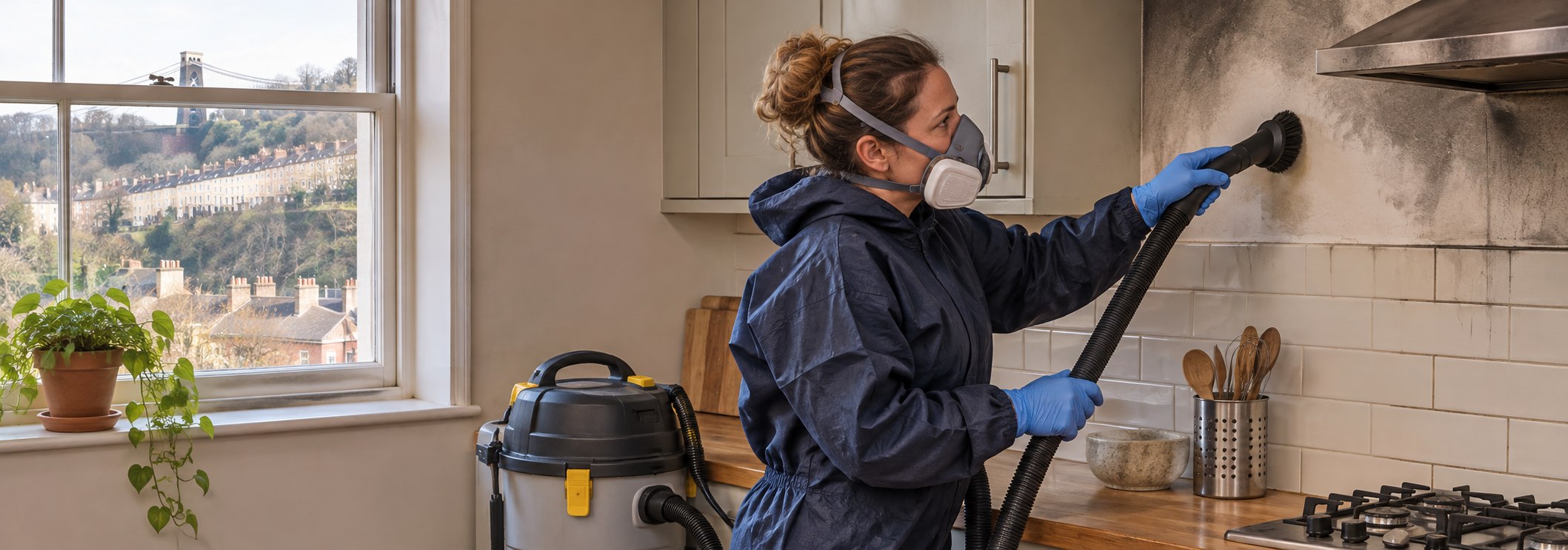
Fire and smoke damage cleaning in Bristol
 Soot on a kitchen ceiling, smoke odour in an upstairs room and wet flooring outside the kitchen door are three different problems. When a Bristol property has been released for access after a fire, Nova Clean helps the owner or managing agent work out which rooms and belongings need attention first. We record the finishes involved, distinguish deposits from heat damage and agree the order of cleaning with anyone responsible for drying, repairs or the insurance file.
Make the property safe before cleaning starts
A fire can affect electrical systems, gas installations, ceilings, glazing and structural components. A cleaner cannot certify that a building is safe to enter or that power can be restored. Confirm the position with the fire service, property owner, insurer and competent trades before arranging access. Keep people out of damaged rooms until they are released, and do not move debris simply to make photographs. If a roof or upper floor is unstable, the cleaning plan must wait for a separate assessment. The same applies to exposed wiring, suspect materials or a waterlogged ceiling. Tell us about any restrictions when you first make contact so we can discuss the work that can reasonably be surveyed. An early visit may be limited to accessible spaces and a later stage arranged after repairs. This sequencing protects the people involved and prevents an estimate from promising work in an area that has not been made available.
Map smoke deposits beyond the visible fire room
Soot can settle in a room that did not burn, particularly around door gaps, ventilation routes, ceilings and horizontal ledges. The pattern depends on the fire, airflow and the time before the premises were closed. A photograph of the main room may therefore understate the work, while a faint smell elsewhere does not automatically mean every material is damaged. We inspect the accessible rooms, identify the surfaces and note where further checks may be useful. The plan can distinguish loose particulate matter from oily or bonded deposits that require a different treatment. Rubbing a sooty wall with an ordinary wet cloth may spread the mark or push residue into a porous finish. An assessment helps determine whether dry removal, a controlled cleaning method or replacement of a damaged material is appropriate. The result should be a room-by-room scope rather than an assumption that one product will treat the whole property.
Separate cleaning from repair and reinstatement
Fire damage cleaning can remove accessible residues from suitable materials; it cannot mend charred timber, restore a weakened structure or replace a failed electrical installation. Paint, plaster, flooring, joinery and insulation may need a separate repair decision. We discuss which surfaces can be tested, which require a specialist and which appear beyond a sensible cleaning attempt. A quotation should say whether the work covers walls, ceilings, fixtures, contents, waste removal or only specified rooms. It should also identify any limitations where deposits are hidden behind fittings. If a contractor is still cutting out plaster or replacing a ceiling, a final detailed clean may be better scheduled after those disruptive stages. Conversely, controlled removal of loose soot can sometimes be an early step before reinstatement. The sequence must be agreed with whoever manages the property and the other trades, especially where an insurer is coordinating the work.
Choose methods that suit each surface
Painted plaster, brick, stone, metal, glass and timber do not respond alike. Heat may have changed the finish, while smoke residues can behave differently according to the fuel that burned. A small trial in an unobtrusive location can show whether cleaning lifts the deposit without damaging the underlying surface. Porous stone or unsealed wood may hold staining after loose contamination has been removed. Abrasion can create a new mark, and excessive moisture can carry residue into joints or other rooms. We explain the proposed treatment and its limits before work begins. A visibly clean surface is not proof that concealed materials have been restored. If a wall needs sealing or redecorating after cleaning, that should be described as a later trade rather than hidden within a promise of complete restoration. The owner can then make informed choices about cost, appearance and the practical next use of the room.
Deal with firefighting water and moisture
For a shop preparing to reopen, the stockroom may have escaped visible soot while water has travelled beneath the dividing door. List the stockroom separately when requesting an assessment. The person arranging water damage cleaning then has a clear record of the affected floor, and the decorator knows which surfaces still need inspection. If contractors are returning, agree when the final clean after repairs should take place.
Water used to extinguish a fire can travel through floors and walls beyond the area of visible burning. Damp materials may need investigation and drying before a finish is cleaned or replaced. The source of any continuing leak should be found, and unsafe electrical equipment should remain isolated until checked by a competent person. A wet carpet or underlay may have absorbed soot as well as water; cleaning its surface will not necessarily resolve what lies beneath. We ask how long the property has been closed, what water was used and whether a drying contractor or surveyor is already involved. Work can be staged so that wet material is assessed and appropriate repairs are arranged before cosmetic cleaning. The quotation should distinguish fire residue removal from water damage treatment, since combining the two into a vague instruction can obscure a significant part of the job.
Address smoke odour at its source
Smoke odour can linger in soft furnishings, unfinished timber, cupboards and cavities, even where a room appears fairly clean. Spraying perfume into the air does not remove the material producing the smell. The first step is to identify accessible deposits and damaged contents, then decide what can be cleaned or should be removed. Ventilation and drying also matter. If a smell returns when heating is switched on, or after the building has been closed, another source may need investigation. We avoid an unconditional promise that a single treatment will permanently eliminate every odour, especially where concealed areas cannot be inspected. A suitable supplementary odour process can be considered after source removal, with its scope and limitations explained. It should not be used as a substitute for identifying charred materials or residues left behind a fitting.
Protect and assess contents with the owner
A damaged room may contain documents, stock, furniture, electronics and sentimental possessions. Decide who can authorise moving, cleaning or discarding each category. Some hard items may be suitable for careful cleaning, while porous contents can retain odour or contamination. Electrical devices should not be switched on merely to see whether they work after heat, smoke or water exposure. An insurer may have inventory requirements, so agree photographs or a list before items are removed. We can distinguish moving possessions to reach a surface from treating those possessions as part of the cleaning service. If an object has special value, the owner may prefer advice from a conservation or specialist repair professional. This avoids accidental damage caused by a method suitable for ordinary fixtures but unsuitable for a delicate finish. The client should have a clear decision point for items whose condition becomes apparent only when debris is cleared.
Plan waste removal and movement through the building
Ash, damaged furnishings, broken materials and packaging can create a considerable volume of waste. The type and quantity may be uncertain until an accessible assessment is complete. A scope should explain what is included in removal, how material will be carried out and whether separate disposal arrangements are needed. In an apartment block, a lift, communal corridor or shared entrance may need protection and agreed working hours. A shop near Bristol city centre can have restricted loading and public foot traffic, while a house in Pill or Winterbourne may have different vehicle access but more outdoor space to protect. The team should know where clean equipment can be placed, where collected material can be contained and how unaffected rooms will be kept separate. If an unexpected hazardous material is found, work in that area should pause for the appropriate assessment rather than treating it as ordinary fire debris.
Coordinate a commercial or tenanted property
For a business, the cleaning timetable may depend on security, deliveries, staff access and the repair programme. The person commissioning the work should identify the responsible contact and any equipment or records that cannot be moved. A restaurant may have smoke on surfaces well away from the seat of the fire and water inside cabinets; food handling spaces require a clear handover before operations resume. In a rented home, a landlord and tenant may have separate responsibilities for contents, building fabric and access. We can describe the observed cleaning needs without deciding insurance liability or making a claim about the fitness of the premises for occupation. A written sequence helps the agent, insurer and trades understand which rooms are being treated and what remains. If access changes or additional damaged material is uncovered, the scope should be revised with the authorised client rather than extended silently.
Planning access for smoke cleaning in Bristol homes and businesses
Properties in Clifton and Redland can have older finishes and narrow staircases that need particular care. In Bedminster and St George, a home or small commercial unit may share a wall or service route with neighbours. Filton contains workplaces and residential buildings whose access hours vary. Frampton Cotterell, Winterbourne and Pill add different travel, parking and external access conditions. Local knowledge helps with logistics, but the building's actual condition determines the method. When requesting a quotation, tell us the address, property type, rooms affected, known water damage, available utilities, restrictions on entry and whether repairs are underway. Existing photographs can help if they were taken safely. We can explain whether a visit is required before a firm price and what information an estimate will contain. The proposal should name the areas, methods, waste assumptions, exclusions and handover arrangements. It should also say how a hidden condition will be handled if it changes the work.
Review the result and plan what follows
At handover, compare the agreed scope with the areas actually treated. A room may be free of loose soot yet still need painting, replacement flooring or a specialist inspection. Remaining staining or odour should be described plainly, along with the reason that further investigation or repair may be needed. Photographs and a room schedule can help an owner who could not attend, subject to privacy and property rules. If another contractor is due to work, the handover can identify what has been cleaned and what should remain protected. We do not treat a cleaning visit as a certificate of structural safety or an assurance that every damaged item can be reused. It provides a defined part of the recovery process with clear boundaries and evidence of the work carried out.
Document the starting condition without delaying urgent decisions
For owners and agents, a record of the condition before cleaning can make later decisions clearer. Photographs from safe accessible locations may show the spread of residues, the condition of flooring and the items present, but they should not delay safety work or require anyone to enter a restricted area. Note the date when utilities were isolated, the areas released for access and the names of the people who can approve removal. A room schedule can distinguish damage directly linked to the fire from older wear, damp or unrelated defects. If a policyholder needs evidence for an insurer, agree the format with that insurer rather than assuming a cleaning contractor's photographs will meet every requirement. This preparation helps a cleaning quotation stay focused on the work it can deliver while the owner retains control over repairs and contents.
Allow for a staged return to ordinary use
After cleaning, the building may still require drying, electrical checks, construction work and a final detailed clean. Dust from later repairs can settle on surfaces that were already treated. Ask the trades about their schedule and protect completed rooms where possible. A staged plan reduces repeated disturbance and makes it easier to decide when furniture, stock or staff can return. The final decision on reoccupation belongs to the relevant owner and competent advisers, based on the whole property's condition rather than the appearance of a cleaned wall. We can discuss a follow-up clean once disruptive works are finished if it falls within the agreed service.
To discuss fire and smoke damage cleaning in Bristol or the surrounding towns, call 0845 52 805 20 or email